In many Black families, there’s a familiar phrase that gets passed around when a father is no longer in the picture. “You’re the man of the house now.”
It’s said with love and usually with the best intentions, but underneath it lies a heavy expectation that no child should have to bear.
I’ve seen it firsthand with my two brothers. One older, one younger. Both were told that same line. And though they handled it differently, I could always see what it did to them. It made them grow up before they were ready. It made them feel like they had to protect, provide, and stay strong even when they were hurting inside.
The truth is, those words are a quiet thief of childhood. They take away softness, playfulness, and freedom, replacing them with pressure, silence, and responsibility that doesn’t belong to a boy still learning who he is.
Emotional Weight and Mental Health
When a young boy is told he is the man of the house, he internalizes the idea that emotions are weakness and vulnerability is off-limits. Over time, that message can turn into suppressed anger, anxiety, depression, or emotional distance in adulthood.
These boys learn to hold it all in, to be the strong one, the reliable one, the one who cannot fall apart. But inside, they often feel unseen. The expectation to step into a father’s role before they’ve even had a chance to understand manhood creates confusion and emotional conflict.
It’s not that mothers or caregivers mean harm when they say it. Many are simply trying to encourage strength in a painful situation. But the result is often the opposite. It builds emotional walls that take years to unlearn.
The Impact on Growth and Development
A child’s development depends on being allowed to feel, explore, and make mistakes. When a boy feels like he has to be “the man,” he skips vital stages of emotional growth. He starts prioritizing survival over self-discovery.
This can affect how he relates to others later in life. Friendships, romantic relationships, and even his relationship with himself can become built around the need to always appear strong. He may struggle to ask for help or to express pain, believing that doing so makes him weak.
Healing the Narrative
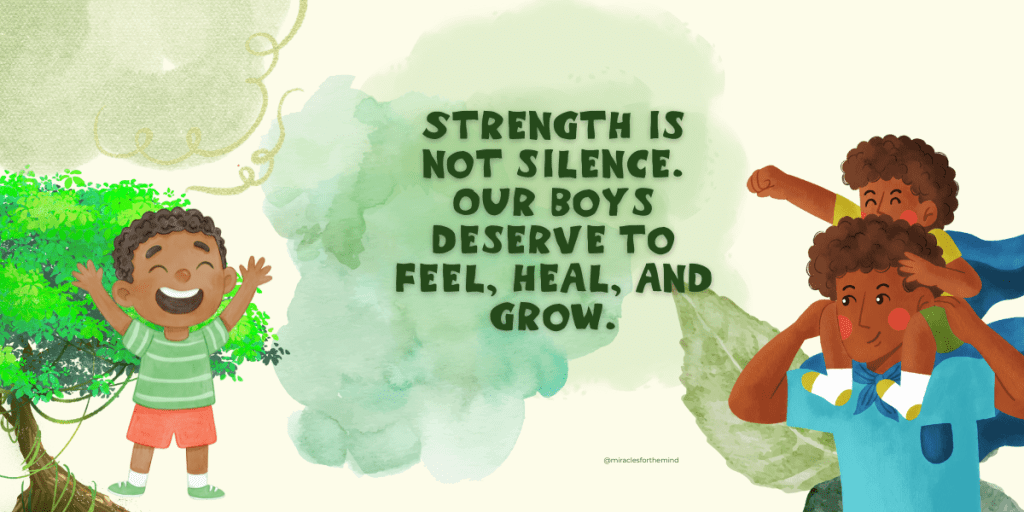
We can change the narrative by giving young Black boys permission to simply be boys. They deserve to cry, to laugh, to feel safe, and to take their time becoming who they are meant to be.
Instead of saying, “You’re the man of the house,” we can say, “You’re loved,” or “We’re in this together.” These small changes in language make a big difference. They remind boys that they are not alone in carrying the weight of the world.
Healing begins when we stop placing adult responsibilities on children and start nurturing their emotional worlds. Our boys need guidance, not pressure. Support, not silence. Space to grow, not the burden to fill a void that was never theirs to fill.

 Miracles for the Mind